
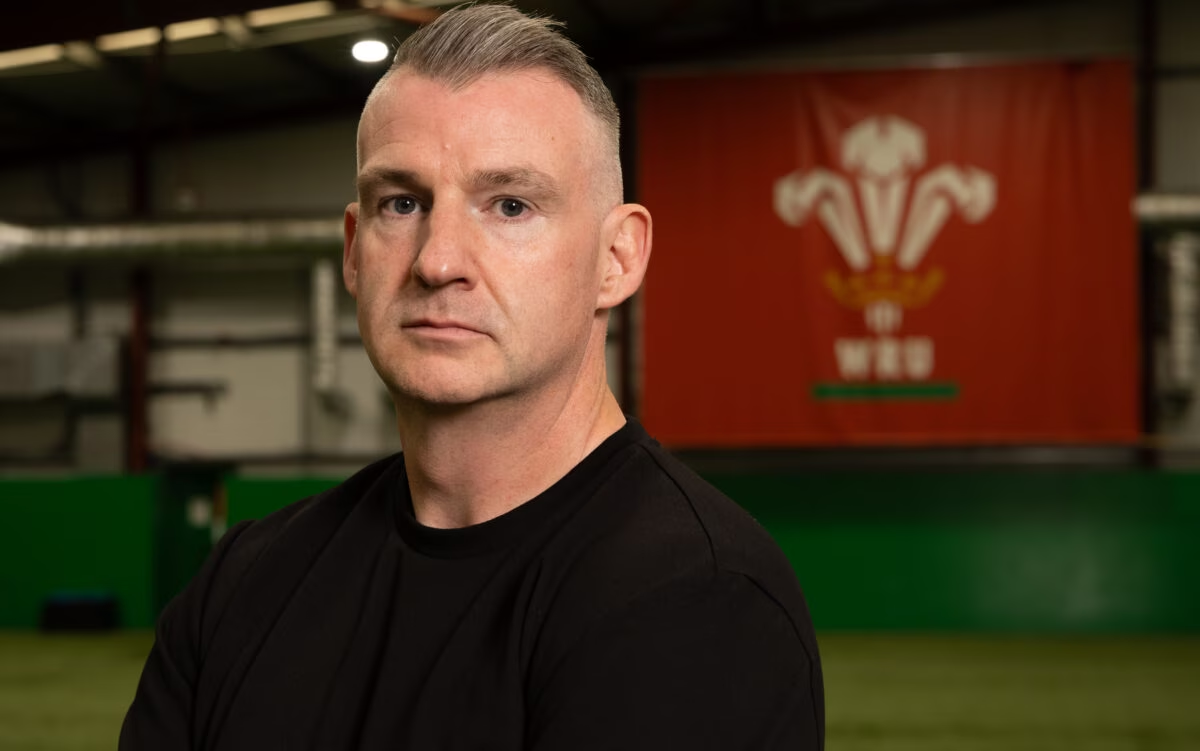
He may have made his name on the sporting scene initially as a world class rugby analyst where he gained notable success with both Wales (two grand slams and a Six Nations title) and the British & Irish Lions (two tours) but for the past decade Rhys Long was an invaluable cog in the England Football Association machine as head of performance analysis and insight.
He was heavily involved in seismic change as the FA went from a traditional governing body toward a more modern, high performance and talent development-focused organisation.
Originally from Porthcawl, Long, left the WRU in 2016 to join the FA where he worked with England managers Gareth Southgate, Thomas Tuchel and Serina Weigman and was heavily involved in supporting the development of world leading player development pathways in football.
Three months into his new role as WRU technical director, he is determined to replicate the success he had at the FA. He has hit the ground running and is determined to create a uniquely Welsh talent development system that will essentially give Wales a competitive advantage that no other nation can copy.
He has already travelled the length and breadth of Wales and watched everything from Men’s and Women’s under 10s, through to colleges, academies and Super Rygbi Cymru as he comes up with a talent development blueprint for not only the here and now, but for the next 10+ years.
Long is taking the challenge of rebuilding Welsh rugby head on and believes the current predicament where Wales finds itself struggling in the top-flight is very similar to when he arrived at the FA in 2016.
At that time the men and women’s teams were in the doldrums – by the time he had left England women had won back-to-back European championships and the men’s side had their best ever finish at a World Cup since winning it in 1966.
“I was really excited taking on this role because I know that there are things that we should be doing here that I’ve been part of over the last 10 years that can be really applied here to start producing better boys and girls as they come through the pathway,” he said.
“Back in 2016 England lost against Iceland and we started to implement a proper long term strategy.
“I wouldn’t say this role with Wales is harder than the one I came into with the FA.
“I’ve worked with some of the best people in the game, whether that’s from a talent management, performance or pathway perspective,” he said.
“I’ve worked with top recruiters at clubs such as Arsenal and Manchester City, all the way through to John McDermott at the FA, who has overseen talent development in a Premier League academy system that brought through players such as Harry Kane.
“Through all of that, I’ve seen first-hand what some of the best in class talent management and development needs to look like.
“Before I left the FA, it was all of those strategic things that I was working on, whether it was talent, some of the more futuristic innovation pieces, such as developing an innovation centre at St George’s Park, or performance programming.
“I was also sitting on the senior leadership team asking, ‘How do you win a World Cup in the next four years, and how do you help your head coaches, your Under-21 head coaches and your pathway develop those players so that you start winning in four, eight and 12 years’ time?’
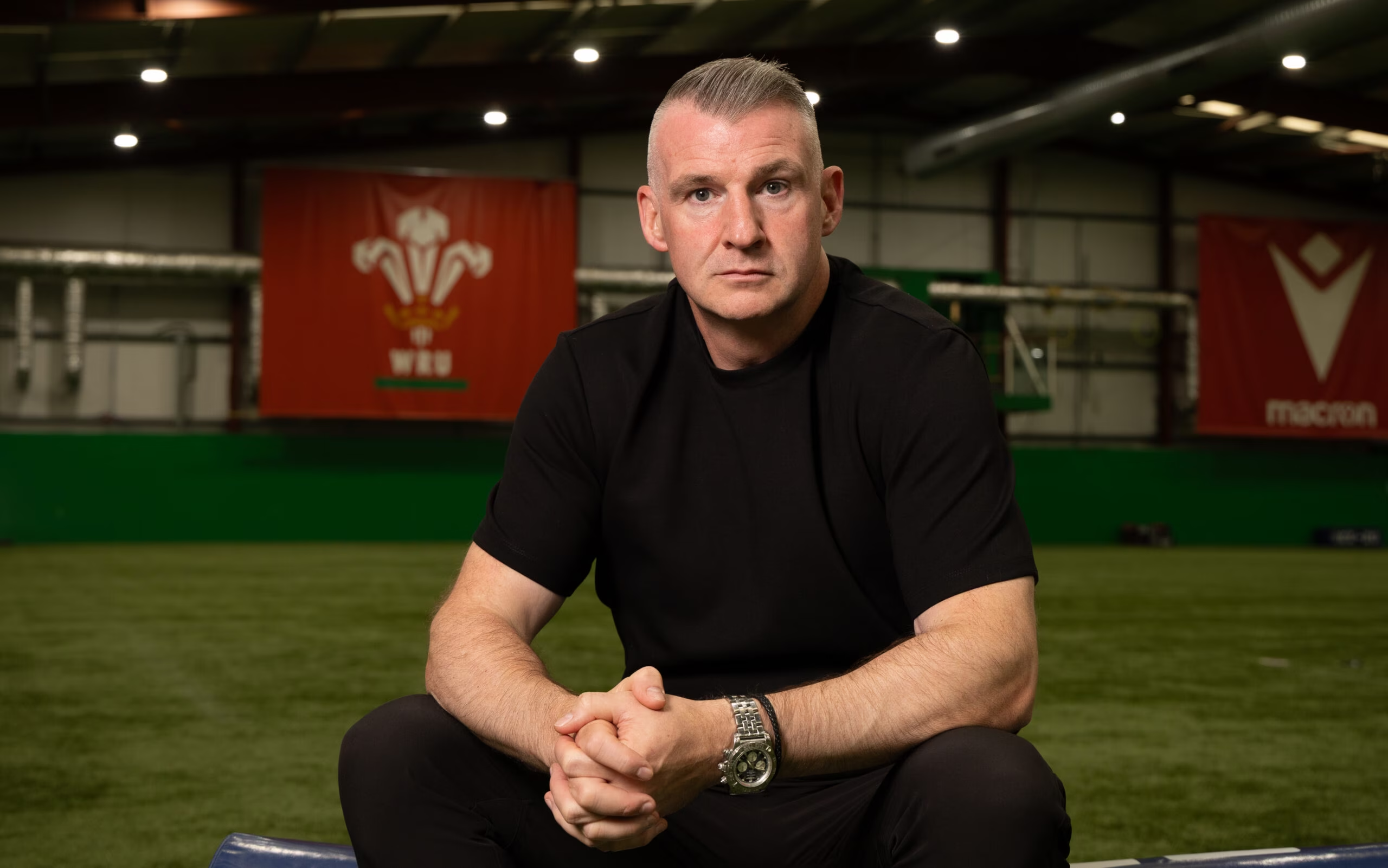
“Steve (Tandy) is working with Dave Reddin on how we move forward from where we are and start becoming really competitive again. Then, how do you move into the next stage, becoming contenders and challenging for things? Eventually you get into the winning stuff, but first you have to put the building blocks in place.
“Having played in the system, worked in the system, lived in the system, I know how important rugby is to everyone here.
“And the biggest thing for me was understanding that to get this right for the next 10 to 15 years, we need a comprehensive plan of how we’re going to do talent development in Wales.
“I thought from the experiences I had in working at the WRU and the knowledge that I’ve got from living, working, playing here, and what I’ve seen and had the experiences of working in football gives me a unique insight. How can you not only bring back some of that knowledge and help Welsh rugby, but also really accelerate things that probably none of the other nations are really doing?
“When I was working here 10 years ago, the thing I always felt was missing the most was a proper future vision and plan for 10 to 15 years of how do you build on the success of the senior team and what does it look like going forward for the next generation?
“That’s the bit that I’m most passionate about here is making sure that for our 11-year-olds or 14-year-old boys or girls, there’s a firm vision of what it looks like when they get to 20, what it looks like when they get to 25 playing for Wales and hopefully winning in a Welsh shirt.
“I’ve been here for 12 weeks, and I’ve gone around to pretty much most Welsh schools, colleges, academies, gone into boys’ and girls’ festivals to see where the talent is. There’s a lot of good work going on and I need to stress that. There is lots of good practise in pockets across the whole of Wales.
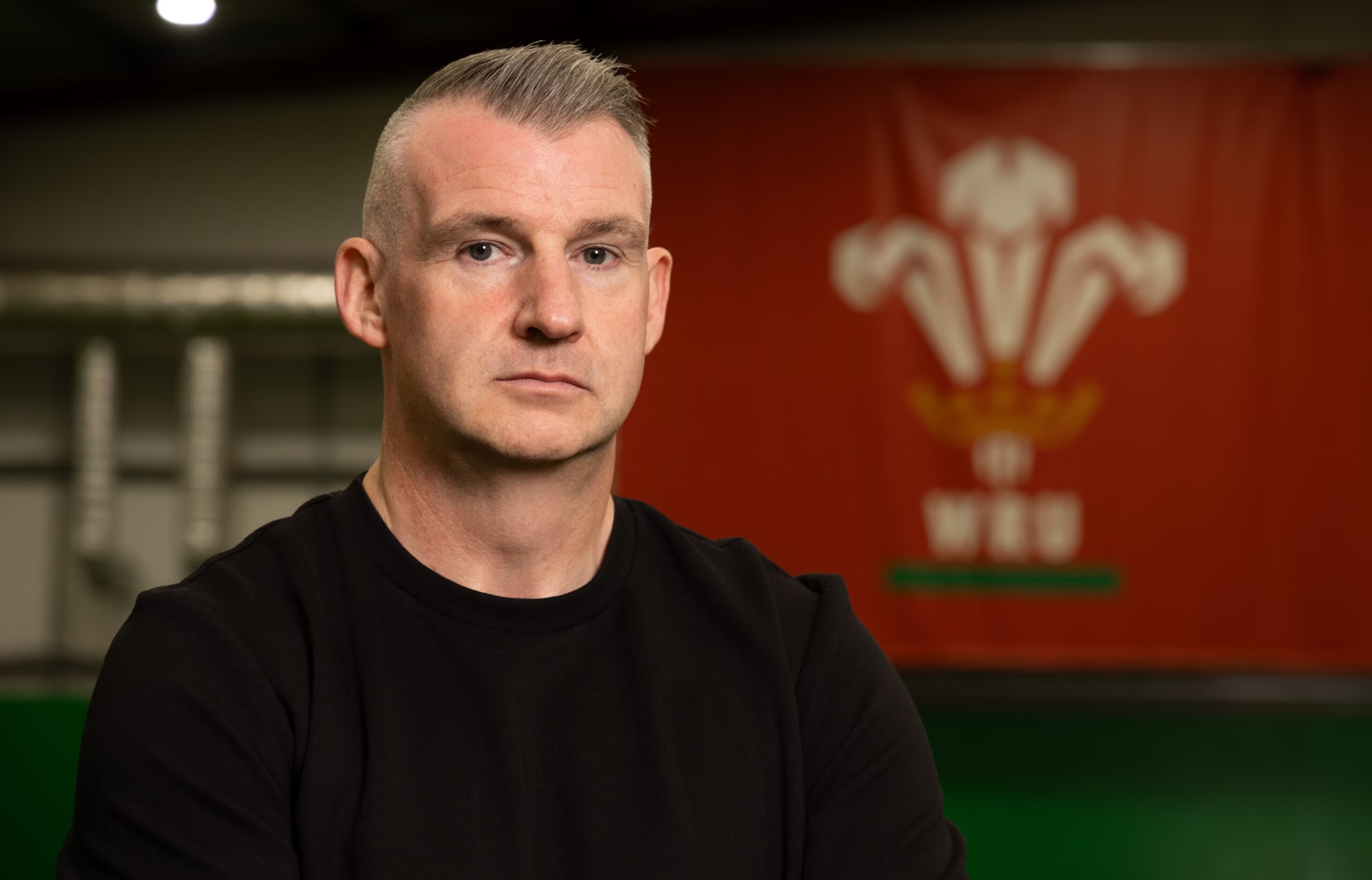
“The biggest thing for me is that the system isn’t joined up enough. That’s what should be our biggest unique selling point. Whether that’s the regions and the WRU, the academy system and the schools and colleges, whether that’s the community clubs and those schools and colleges, whether that’s the minis and juniors, everything in the pyramid – we should be more joined up than we currently are.”
Long has seen enough already to know the raw ingredients already exist but everyone has to be on the same page for any development system to thrive.
“If we can get this talent development system, really up and running and producing really good players, like I know we can – there is no reason why players can’t go on to represent Wales, or the British Lions in both the boys and the girls’ game,” he declared.
“I think we’ve got to make sure that we look ourselves in the eye and say, is our system working as well as we all want it to work?
“I think being where we are in the world ranking tables probably tells us we’ve got a bit of work to do.”
With both the men’s and women’s national teams falling on hard times recently, Long is confident that with a strong development system in place, it won’t be long before Sean Lynn and Steve Tandy’s sides are dining at the top table once again.
“I wouldn’t have taken this job if I didn’t think we could put in place the talent development system that I know we’re capable of. If we can get the game to work around that and actually come together, then we have the talent coming through.
“It is a long way off at the moment, but there is no reason why we can’t produce a talent development system capable of producing players who can win a Champions Cup, beat the All Blacks and win a World Cup. That’s what I want.”