Welsh rugby can boast of many talented all-round sportsmen who have played at international level in more than one sport and today we thought we’d resurrect the memory of a great man of Gwent – Lou Phillips.
Where he first trod, so many great players followed in having more than one sporting career. For instance, the flying Newport wing Ken Jones, who held both the Welsh cap and try record for many years, won an Olympic silver medal in 1948 as part of the British 4 x 100 relay squad. He also won medals at the Commonwealth Games and European Championships.
Nigel Walker won European and World Indoor 60 Hurdles medals, and ran at the OIympic Games, World Championships and Commonwealth Games, before turning his hand to rugby, while former Cardiff scrum half Maurice Turnbull played cricket for England and hockey and squash for Wales.
Newport wing Tom Pearson played tennis for Wales and also captained Wales at hockey, while his Newport clubmate Bert Dauncey won three caps and played tennis and hockey for Wales.
Wilf Wooller led Glamorgan to their first County Championship title in 1948. Back row man Richie Collins played basketball for Wales, while Arthur ‘Candy’ Evans boxed for Wales as an amateur before turning professional in the ring and with rugby league.
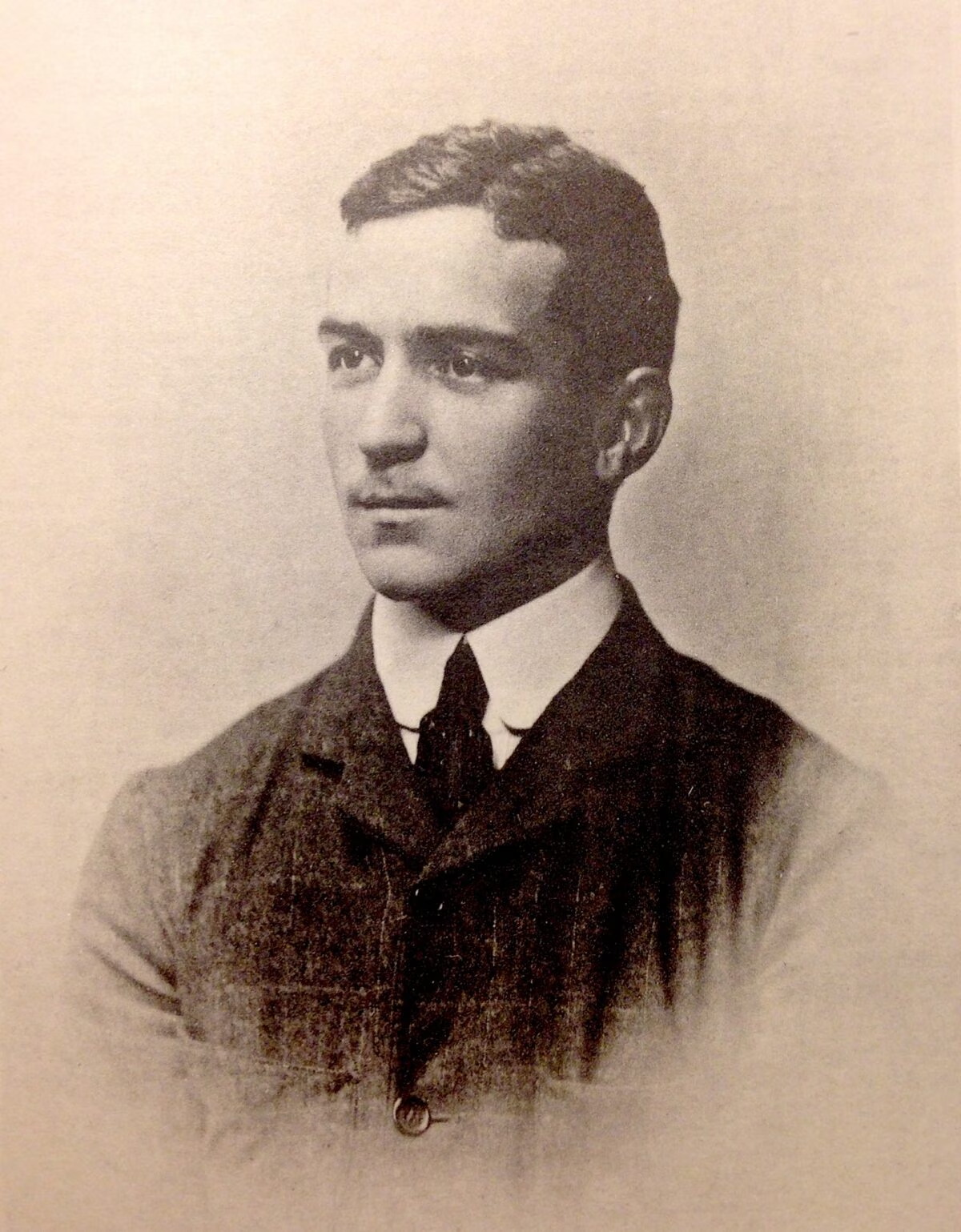
Another multi-talented player was Newport’s Lou Phillips, who not only won four caps as a half-back, but featured throughout Wales’ second Triple Crown season. Having learned his rugby at Monmouth Grammar School, he joined Newport in 1897 and struck up a brilliant partnership with G Llewellyn Lloyd.
They played together in three of Phillips’ four international appearances and regularly in Phillips 90 matches over four seasons for the Black & Ambers. Unfortunately, his rugby career was cut short at the age of 23 due to a knee injury initially sustained in a game against Cork Constitution.
That happened the day after Boxing Day 1900 and the victory that day ensured Phillips went unbeaten in his 15 appearances for the club in his final season. The injury forced him to miss the opening game of the Home Nations Championship in 1901 against England, but he returned for Round 2 against Scotland.
He shouldn’t have! Within 10 minutes he was a virtual passenger due to his injury, and the Scottish half-backs ran riot to inspire a 18-1 triumph at Inverleith that brought to an abrupt end Wales’ record run of four wins on the trot.
A good all-round sportsman, he played water polo and cricket, featuring in a Minor Counties game for Monmouthshire against Glamorgan, but his big summer passion was golf. He played out of the Newport club along with Llewellyn Lloyd and was good enough to win the Welsh Amateur title in 1907 and 1912 and was runner-up in 1908.
On top of that, he played for Wales against Ireland, finished runner-up in the Irish Amateur Championship in 1913 and reached the last eight in the Amateur Championship.
An architect by trade, when WW1 broke out, he was quick to enlist, joining the Public Schools Battalion of the Royal Fusiliers in September 1914, at the age of 36. He went to France on 16 November 1915 and four months later he was shot through the chest while out on a wiring party on the night of 14 March 1915.
He was buried in the Cambrai Churchyard. A great player and champion, his memory and sacrifice will never be forgotten.
Related Topics
News
News