WALES AT TWICKENHAM IN THE CHAMPIONSHIP – Played 52 – ENGLAND 32 WALES 13 DRAW 7
They called it ‘Billy Williams cabbage patch’ in the beginning when the RFU first purchased a 10.25 acre (4 hectare) market garden in Twickenham in 1907 for the princely sum of £5,500 12s 6d.
It was RFU council member William Williams and treasurer William Cail who sought out the venue and bought the land in the wake of sell out crowds against New Zealand (1905) and South Africa (1906) at Crystal Palace.
It proved to be a wise purchase with the venue turning into the home of English rugby for the past 126 years. Now branded as the Allianz Stadium, it has become the world’s biggest rugby stadium with an 82,000 capacity that will be filled to overflowing this weekend for the England v Wales Six Nations opener.
1910 – TWICKENHAM OPENS
Wales were the first team to play an international at the famous ground on 15 January 1910. On that occasion the capacity was only 20,000.
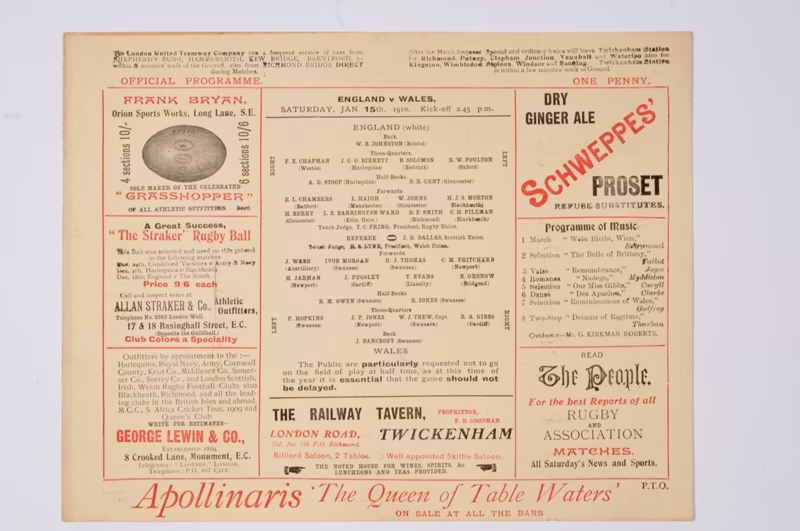
Wales arrived as back-to-back Grand Slam champions and on a run of 11 straight wins. Their bid to make it a dozen got off to a bad start as England scored from the kick-off. The Bridgend forward Ben Gronow kicked off for Wales and Adrian Stoop launched an immediate attack. This is how The Times recorded what happened:
English fifteens have often been accused of taking a long time to settle down to their game, but this was not the case on Saturday. Indeed, the beginning of the match was sensational. Ben Gronow kicked off for Wales, and the ball went to Adrian Stoop, who ran through to the centre and then punted over the Welsh backs. The Englishmen followed up and tackled their man; there was a scrummage, and then Stoop, getting the ball again, passed to John Birkett, who passed again to Fred Chapman at the right moment and a try was scored.
England went on to win the game 11-6 and beat Wales for the first time in 12 years. They also took the championship title away from Wales.
1910 – A WELSH WINNER AT TWICKENHAM
There was at least one Welshman who tasted success at Twickenham in that opening international. England scrum half Dai Gent was born in Llandovery and only moved to Gloucester when he couldn’t get into the Welsh side. The Welsh team had to wait 23 years or their first triumph at ‘HQ’.
1921 – ENGLAND’S WELSH CONNECTIONS
In the first post-World War 1 meeting between England and Wales in 1921 at Twickenham there were five players in the English team with Welsh links. Ernie Hammett and Reg Edwards were both playing for Newport. Hammett had played for Wales at amateur soccer against England and had turned down a Welsh rugby trial. Edwards was born in Pontypool, as was fellow forward Tom Woods. Another forward, Ernie Gardiner, was also Welsh born, while WJA ‘Dave’ Davies, the outside half, was born in Pembroke. The 15-point winning margin – 18-3 – stood as a record until 1990 when England won 34-6.
1923 – ENGLAND’S FAST START
England scored one of the fastest ever international tries. They kicked-off through Wavell Wakefield and the strong wind blew the ball back into the arms of fellow forward Herbert Price. He attempted a drop at goal, but his kick sailed wide of the posts. The Welsh defenders waited, expecting the ball to go dead, but instead the faithful Price caught it before it went dead to claim a try within 10 seconds of the start. England won 7-3.
1931 – SO CLOSE, BUT NO CIGAR!
A last gasp penalty from the Blackheath second row Brian Black denied Wales a first victory at Twickenham in 1931. His second penalty, kicked from 50 metres, came moments after Wales wing Jack Morley had run in a try and skipper Jack Bassett had added the conversion. The game ended in an 11-11 draw.
1933 – A FIRST WALES WIN
At the 10th attempt Wales finally triumphed at Twickenham on Saturday, 21 January 1933. Wales had seven new caps, including Rydal schoolboy Wilf Wooller, in a side under the leadership of No 8 Watcyn Thomas.
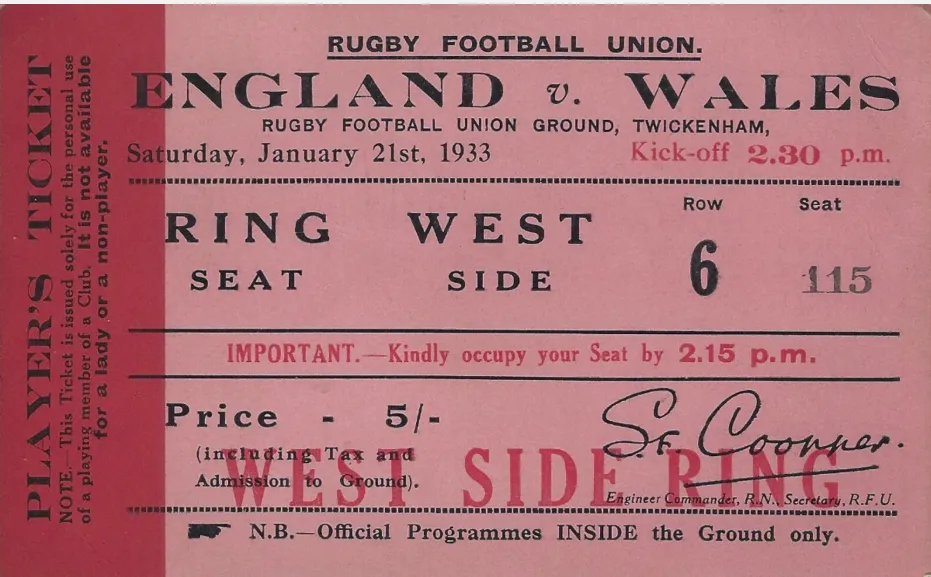
The game became a personal triumph for the Cardiff wing Ronnie Boon, who scored a try and dropped a goal to clinch a 7-3 victory in front of 64,000 fans.
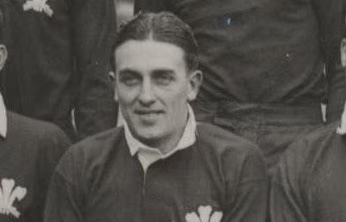
The first Welsh team to win at Twickenham:
Wales: * Viv Jenkins; Ronnie Boon, Claude Davey, * Wilf Wooller, * Arthur Jones; Harry Bowcott, * Maurice Turnbull; Archie Skym, * Bryn Evans, Edgar Jones, Tom Arthur, Dai Thomas, * Ray Jones, * Iorrie Isaac, Watcyn Thomas (captain)
* = New Cap
1935 – ENGLAND HIT BACK LATE AGAIN
England fielded nine new caps in 1935 and managed to clinch a 3-3 draw thanks to a late penalty from debutant full back Harry Boughton. The Gloucester bus driver levelled the scores after Wilf Wooller had scored a try for Wales. This was the first time in 21 games against Wales since 1909 that England had failed to score a try.
1937 – DROPSHOT TRUMPS WELSH TRY
A Hal Sever drop goal outdid a Wilf Wooller try as England won 4-3. This game saw Wales wing Bill Clement and England prop Robin Prescott make their international debuts against each other. In later years they became the Secretaries of their respective Unions.
1939 – PROP’S TRY WINS IT FOR ENGLAND
Derek Teden had a debut to remember as his try at Twickenham was the only score in a 3-0 win over Wales in the last game between the two countries before WW2. By October 1940 he was dead at the age of 24. A Pilot Officer with the RAF Coastal Command his plane disappeared on an anti-invasion patrol with No. 206 Squadron RAF.
THE 1950S – WALES KICK-START TWO GRAND SLAMS
Wales launched their 1950 and 1952 Grand Slam campaigns with victories at Twickenham. John Gwilliam captained Wales on both occasions. In 1950, there were an estimated 25,000 Welsh fans among a record attendance at the ground of 75,532. After this match the RFU made their internationals all-ticket affairs. Wales won 8-6 with two tries from Ken Jones – the first Welsh player to score twice at the ground.
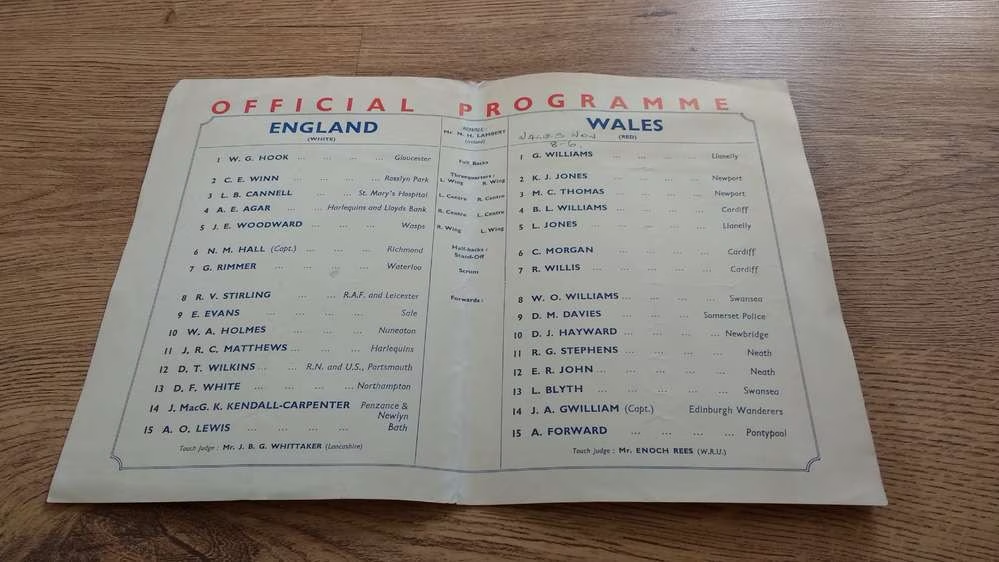
The 1954 clash was the first all-ticket international at Twickenham and England snatched victory with a last minute try to triumph 9-6.
There was a third win in 1956 when the Welsh team, parading nine British & Irish Lions players, triumphed 9-6. The win was a triumph for debut making wing Lynn ‘Cowboy’ Davies as he sped 40 metres to grab the winning score. He is the oldest living Welsh international having celebrated his 96th birthday on 30 December.
So relieved were the Welsh fans at seeing Terry Davies’s penalty soar over the cross bar to force the draw in 1958, that a few of them decided to take a souvenir. Led by Fred Mathias, a top Welsh jockey from Manorbier, a group climbed back into Twickenham after dark and sawed down the cross bar at the north end. They cut it into three, 3ft pieces to take back with them to Pembrokeshire the next day. Stopping for a cup of tea in a Cotswolds café on the Sunday they were delighted when Davies came in behind them and agreed to sign their prized souvenirs.
The attitude at Twickenham by this time was not, however, quite as favourable. Nothing like this had ever happened before at ‘HQ’ and an investigation was begun. As it happened, Davies was a timber merchant and offered to replace the cross bar himself. However, Mathias owned up and wrote a letter of apology to the Secretary of the RFU, Colonel Doug Prentice.
The cross bar can still be found in pride of place in a pub in Manorbier.
HIGHLIGHTS FROM ENGLAND V WALES 1958
THE 1960S – BORE DRAWS AND LITTLE DRAMA
The five games at Twickenham in the swinging Sixties produced three draws, one of them a scoreless contest in 1962, and only 14 points and 2.4 tries per game. England won 14-6 in 1960 to set up a Triple Crown campaign.
Two years later the 0-0 scoreline was the first between the two countries since 1936, and only the third since the two nations first met in 1881. The first came in 1887. There hasn’t been another since. There were seven penalty misses and four attempts at a drop goal from Richard Sharp, for England, missed the target.
Dewi Bebb crossed for two tries in the 6-6 draw in 1964, while new skipper and No 8 Alun Pask scored a dramatic one-handed try to become only the fourth Welsh captain to lead his country to a win at Twickenham in an 11-6 triumph.
There was a third draw in 1968, when new cap Bobby Wanbon scored a try from the Welsh back row – and then switched to rugby league almost immediately.
1970s – WELSH DOMINANCE
There were four wins out of five at the home of English rugby – and it could have been five out of five but for what Max Boyce deemed was “a blind Irish referee.” JPR Williams, who never lost to England in his incredible career, scored a try in 1970 in the 18-9 victory, another in 1972’s 12-3 win and then two in 1976 in the 21-9 triumph.
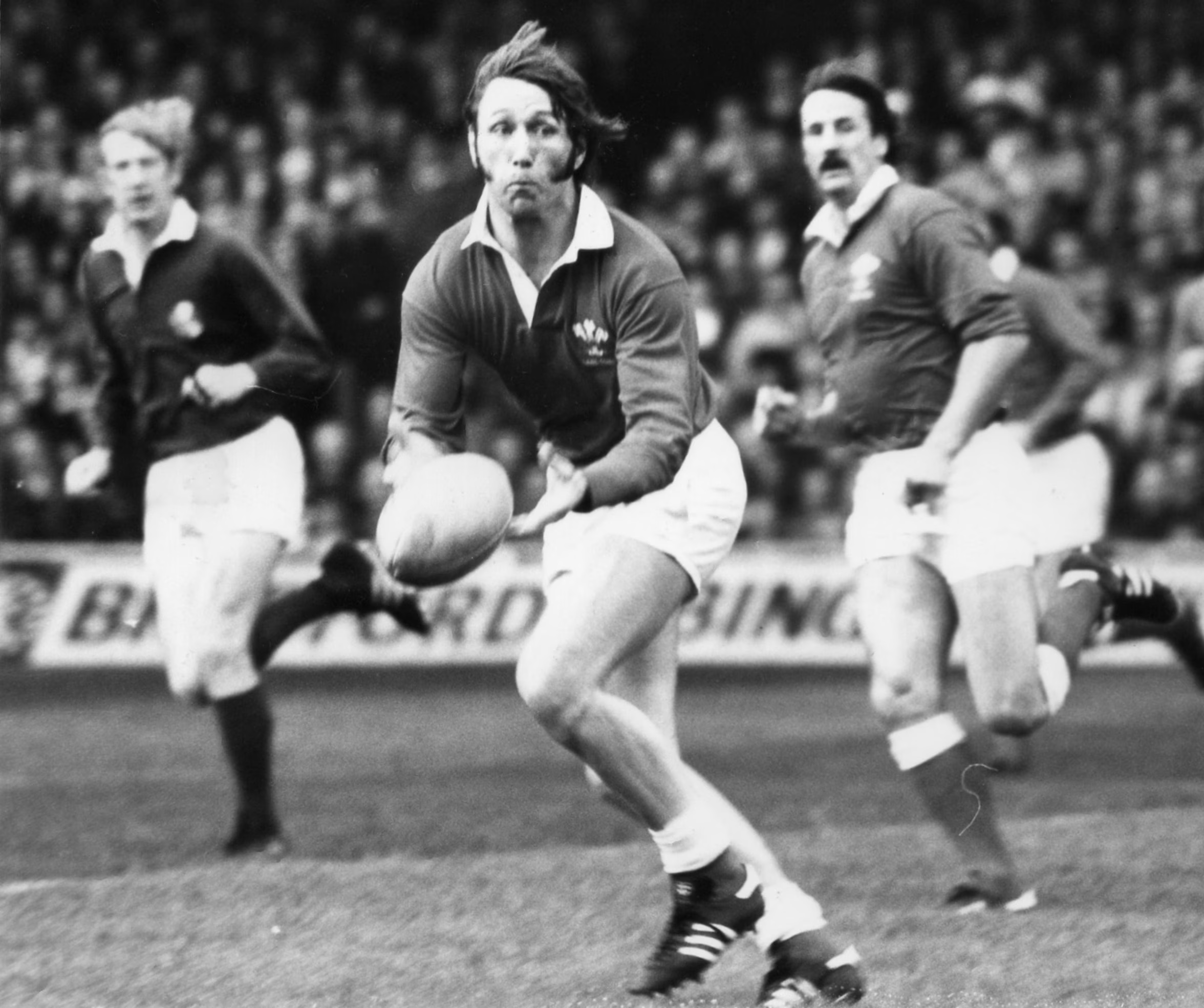
JPR WILLIAMS SCORES AT TWICKENHAM IN 1970
JPR WILLIAMS SCORES AT TWICKENHAM 1976
England’s 16-12 win over Wales in 1974 was their first win in the series home or away since 1963. Wales were unbeaten going into the game that season having beaten Australia and Scotland and drawn with France and Ireland. Irish referee John West disallowed claims for a try by JJ Williams after he felt he had won the race to touchdown over the line after chasing his own kick ahead.
Phil Bennett broke Barry John’s record for the most points in a season as he notched 36 with his second penalty at Twickenham in 1974. He didn’t kick in the opening game of the championship in 1976, but still scored a tournament record 38 points as Wales won the Grand Slam. The 21-9 win at Twickenham featured two tries from JPR Williams and a third from Gareth Edwards.
1978 was another Grand Slam season, this time with Bennett as captain. He kicked three penalties to two from Alastair Hignell to ensure Wales won 9-6.
1980 – WAS RINGER INNOCENT?
Having won the Triple Crown in 1979 Wales headed to Twickenham in Round 2 of the 1980 Five Nations. They had opened their account with a 18-9 home win over the French – a record 23rd consecutive home win in the championship – and revenge for the one point defeat they had suffered in Paris the previous season that had scuppered their Grand Slam dreams. A stormy affair led to Irish referee Dave Burnett issuing a general warning to the two captains, Bill Beaumont and Jeff Squire. In the next phase of play, Ringer came off the back of a line out and tried to charge down a clearing kick out of his 22 by John Horton. His outstretched arm brushed the cheek of the England No 10 and down he went. It was the straw that broke the camel’s back as far as Burnett was concerned and he sent-off Ringer in the 14th minute. Wales scored two tries, yet lost 9-8. England went on to complete the Grand Slam.
1984/1988 – ADRIAN HADLEY WINGS IN FOR WALES
England failed to score a try in four of the five games against Wales at Twickenham in the Eighties, including the 24-15 defeat in 1984. The only try of the game came in the second half after a classic midfield beak by Bleddyn Bowen. He went up the middle of the field, found No 8 Eddie Butler in support and he fed Hadley for a great try at the posts
Rob Andrew kicked six penalties and a drop goal to claim all his side’s points in the 21-18 win in 1986, when Bowen scored the only try of the game.
Then Hadley was at it again in 1988, this time scoring twice in an 11-3 victory that set up a Triple Crown season for Bowen’s side.
WATCH ADRIAN HADLEY SCORING AT TWICKENHAM IN 1988
NINETIES NIGHTMARES FOR WALES
England went victorious against Wales at home throughout the Nineties, scoring 19 tries and conceding only eight. The 1990 game at Twickenham saw England bag a host of records. Their four tries were the most scored by any side in the fixture since the ground opened in 1910; their 34 points was the highest scored in the fixture and their winning margin of 28 points was another new landmark.
England’s 1998 victory by 60-26 erased the records of 1990 for highest points (60), biggest winning margin (34) and most tries (8). Wales scored their most points at the ground (26) and their most tries (4). The 60 points were the most ever conceded by a Welsh side in the championship.
2008 – GATLAND ANNOUNCES HIMSELF
After a record nine successive defeats at Twickenham a new look Wales side with a new head coach, Warren Gatland, came up with a famous victory.
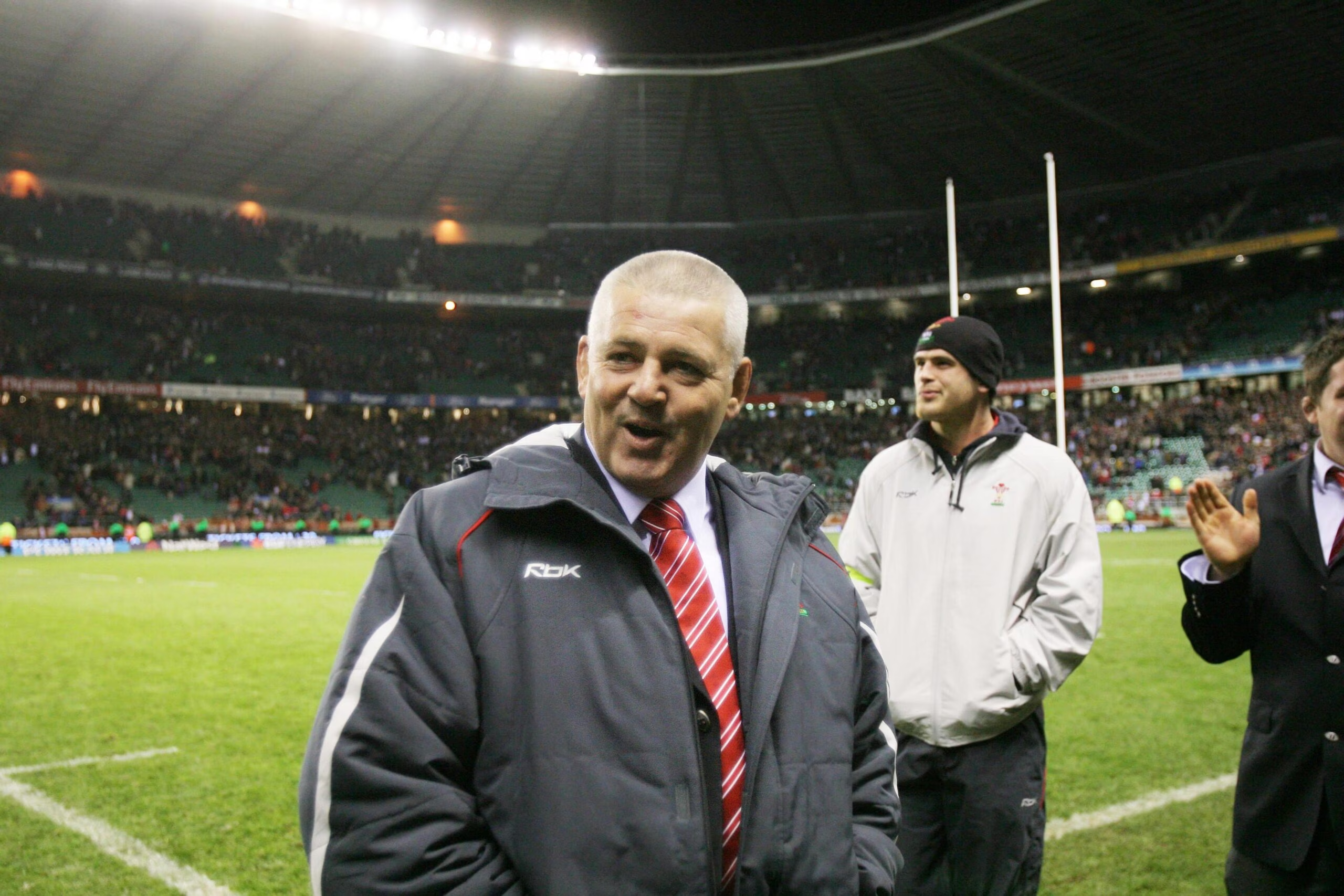
Trailing by 10 points at half-time, Wales hit back with tries from Lee Byrne and Mike Phillips after the break to notch a first win in 20 years with a 26-19 triumph. James Hook kicked 16 points to go with the 22 he had scored in Cardiff the previous year when Wales won 27-18. It was a great start to Gatland’s first reign as coach, with Rob Howley, Shaun Edwards and Neil Jenkins assisting him, and set his side on course or a Grand Slam.
2012 – TRIPLE CROWN CELEBRATIONS
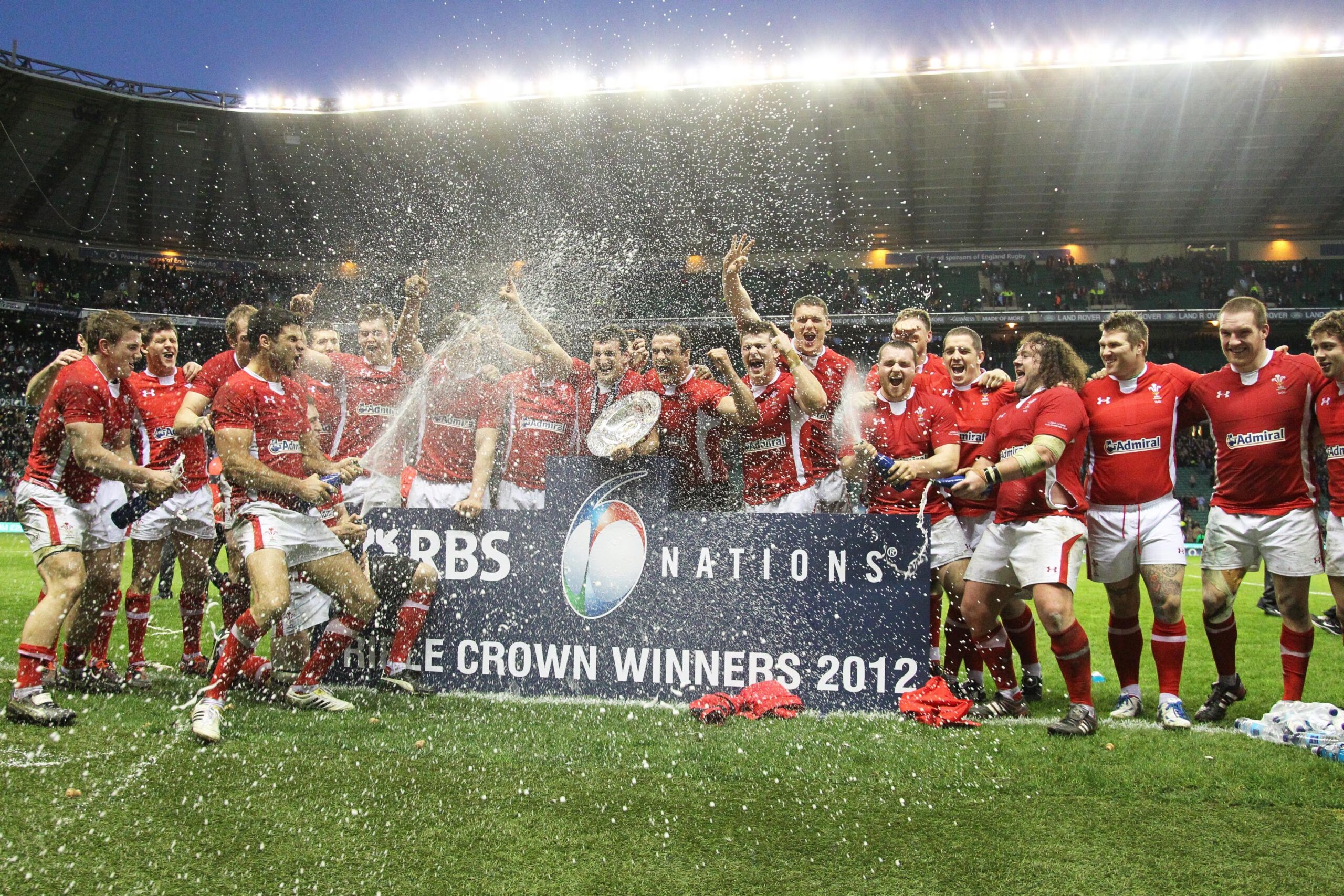
Scott Williams literally stole the show as Sam Warburton’s side won their 20th Triple Crown at the home of English rugby. The Scarlets centre ripped the ball away from Courtney Lawes at a maul near half-way, kicked ahead and then won the race for the try. That set Wales on course for a 19-12 win. They later converted the Triple Crown into a Grand Slam in Cardiff.