
In the following blog post, our National Lead for Player Development and Pathways, John Alder, reflects on the first season of the Super Rygbi Cymru (SRC) and why it matters for the future of Welsh rugby.
He explores how the competition has already reshaped playing styles, created new opportunities for young talent, and strengthened the connection with communities and supporters. Most importantly, he explains why these lessons are central as we open a wider consultation on how to build a sustainable and successful future for the game in Wales.

“When we kicked off the first season of the SRC, we knew it was more than just a new competition format. It was a chance to rethink how we develop talent, connect with communities, and build a sustainable future for elite rugby in Wales.
To have a meaningful domestic league feeding the professional game, acting as a valuable challenge to emerging talent, and exciting and engaging passionate communities was always a key driver in establishing Super Rygbi Cymru and its position in the performance rugby ecosystem. Now, as we open up a wider consultation into the future, it feels like the right time to reflect on what we’ve learned, and where we’re heading.
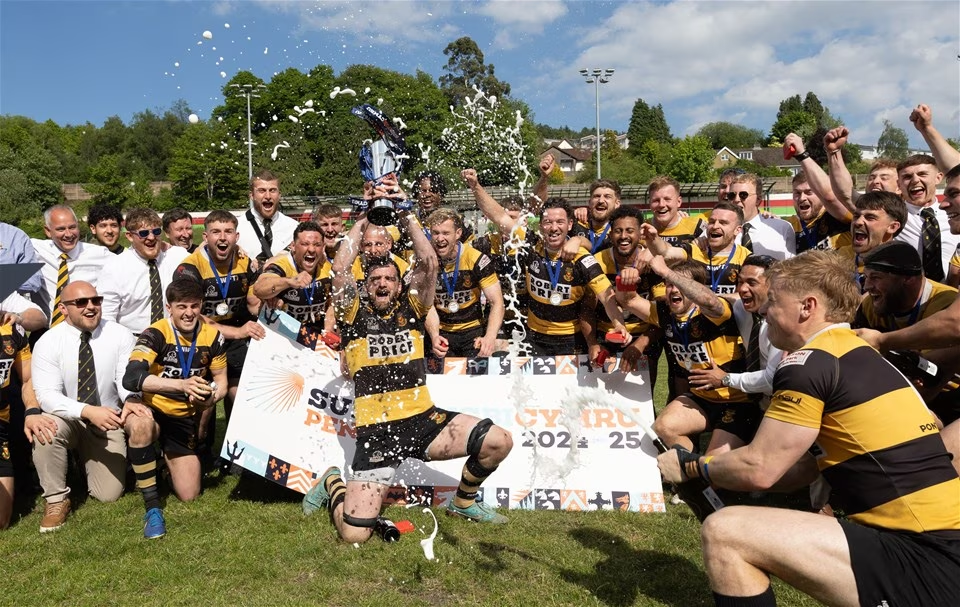
Let’s start with rugby itself. Llandovery, Ebbw Vale, and Newport all lifted silverware this season, each with their own story. Ebbw Vale’s 13-game unbeaten home run to take win and retain the Challenge Shield was a masterclass in consistency, and Newport’s Trophy win in front of 3,600 fans showed just how much appetite there is for high-quality rugby at this level.
But it wasn’t just about the results. The style of play across the SRC was fast, ambitious, and exciting. We saw an average of 34 minutes of ball-in-play time, just a minute behind the URC, and matches were packed with points, tries, and attacking intent. Teams passed more, offloaded more, beat more defenders, and played through more phases than we’ve seen in previous formats. This data clearly represents a shift in mindset.
And the players? They’re younger, hungrier, and getting more opportunities. The average age dropped from 26.5 to 25, with Aberavon leading the way, transforming from the oldest team in the Indigo Prem to the youngest in the SRC. That’s a big change, and it’s already paying off.
Ellis Mee’s journey from SRC to Scarlets starter to a first cap for Wales, all in one season, is a powerful example of what’s possible. And he’s not alone. We’ve seen players graduate to the URC, and many of SRC regulars have gone on to represent Wales U20 in the Six Nations and Junior World Cup.
Game time for U20s increased by 70%, and that translated into our best Six Nations finish since 2017, including a win over reigning World Champions England in front of 8,500 fans at Cardiff Arms Park.
Behind the scenes, our coaching pathways are evolving too, Scott Baldwin joined Bridgend’s coaching team, Bradley Davies moved up from the SRC to the Scarlets, and Jonathan Thomas will be leading Swansea this season. This is part of a broader ‘One Wales’ strategy to connect experience with development.
Media coverage has grown significantly. We broadcast 21 live games, supported by 18 Tuesday night highlights shows in the inaugural season, with TV audiences growing 40% year on year, YouTube by 29%, and S4C Clic streaming by 21%. The RGC v Bridgend Christmas clash drew 109,000 viewers and across social media, we hit 1.5 million views. Our audience is diverse and growing, especially among younger fans.
The elite player pathway in Wales must be a key part of the future vision of success in Wales. To date male players progressed through established structures such as the Regional Academies and Super Rygbi Cymru (SRC), however the women’s game still lacks a comparable senior domestic tier.
Aligning and integrating existing pathways more effectively, across the men’s and women’s game, age groups, and levels would strengthen the system as a whole, enabling better development and producing more and better players for Welsh professional rugby and for Wales.
Although the WRU has made recent investments in the men’s Regional Academies, SRC, and moderning through the Emerging Player Programme (EPP), and women’s development, such as the Player Development Centres (PDCs), these efforts will take time to bear fruit and are challenging at times to deliver greatest impact due to the high volume of stakeholders involved, often with different goals and philosophies.
As such, there remains a disconnect between grassroots rugby, talent development, and elite performance pathways, highlighting the need for dedicated and continued focus, alignment, and investment to move towards a more integrated and coherent rugby ecosystem.
As we head closer to the start of the new season, matches will be spread across Thursdays, Fridays, Saturdays, and Sundays, and each week will feature a feature match broadcast live on S4C with all other games professionally filmed for weekly highlights of every match on YouTube and S4C. First up, we have a thrilling match between current SRC Champions Newport and SRC Cup winners Llandovery Newport Stadium on Friday 12th September, live on S4C at 19:45.
This isn’t just about celebrating a successful season. It’s about being open about where we’re going. We know the future of elite rugby in Wales needs to be built together with transparency, collaboration, and a shared sense of purpose.
We’re not just talking about change, we’re inviting you to be part of it.
Let’s keep the conversation going.”
John Alder National Lead (Player Development and Pathways)